
You spent your career on Wall Street as a short-seller. What does that mean — and why does it qualify you to talk about a federal judge?
It means I made my living betting against frauds and proving I was right. Over the course of my career I took on dozens of them, one after another — public companies that were lying to investors, lying to regulators, cooking the books, selling stories that didn't survive contact with the facts. I started, as I like to say, with a pad, a pen, a phone, no friends, and no capital. No syndicate behind me. No institution covering my back. Just the willingness to do the work, publish my findings under my own name, and stand there and take the incoming fire.
And the fire came. Here's the pattern, and it never changed: when you accuse a powerful enterprise of fraud and you're right, the first thing that happens is they come after you. Not the facts — you. Lawyers, investigators, friendly reporters, every pressure they can bring. I lost count of the threats. But that's how I learned, in the most expensive school there is, how concentrated power protects itself — how an enterprise built on deception uses process, delay, friendly insiders, and a closed system of self-review to survive long after the facts have caught up with it. I learned what it looks like when the people who police an institution are drawn from the very same club as the people they're supposed to be policing.
I spent thirty years learning how that works, the hard way. So when I look at the federal judiciary today, I see the same architecture I spent my career pulling apart. Same blueprint. So no — I'm not a lawyer, and I'm not pretending to be one. But I spent my whole career studying institutions that answer to no one, and I'll tell you something: I know one when I see it.
I took down dozens of frauds in a row with a pad, a pen, a phone, no friends, and no capital. I know a closed system that answers to no one when I see one.
That's a strong claim — that the federal judiciary "answers to no one." Walk me through it.
We're taught in school that we have three branches and they check each other. Right? That's the civics-class picture. The president can be impeached. Members of Congress face the voters every two years, every six years — they can be expelled, defeated, indicted, run out of town. The executive bureaucracy has inspectors general, FOIA, oversight hearings, the whole apparatus of daylight. Imperfect, all of it. But the channels exist, and they get used. People lose their jobs. People go to prison.
Now ask the simple question about the third branch. The one nobody asks. Who judges the judges?
The President
Impeachment. Elections. Oversight. Inspectors general.
The Congress
Voted out every 2 & 6 years. Expelled. Indicted.
The Courts
Judges police judges. No removal short of impeachment. The Justices: exempt entirely.
The answer, by design, is other judges. Under the Judicial Conduct and Disability Act of 1980, when a citizen files a complaint against a federal judge for misconduct, it doesn't go to some independent body. It's handled inside the judiciary itself — reviewed by the chief judge of the circuit, then a committee of judges, then the judicial council of the circuit, which is, you guessed it, made up of judges. Judges investigating judges. Judges disciplining judges. And the discipline they're even permitted to hand out stops well short of removal. They can censure. They can reprimand. They can ask a judge to stop taking new cases. They cannot remove an Article III judge. Only impeachment does that, and the impeachment of a federal judge is so rare it's practically a theoretical event.
And here's the part most people don't know — the part that, when I explain it, stops people cold. The Justices of the Supreme Court are not even covered by that statute. The nine most powerful judges in the country — the ones whose decisions are final, unappealable, the last word on everything — sit entirely outside the formal misconduct machinery that governs every other federal judge in America. In recent years, under public pressure, they adopted a written code of conduct of their own. But it's a code they wrote for themselves, by themselves, with no outside enforcement attached to it. It's an honor system at the very top of American power.
There is no check there. What you're looking at is a closed shop.
Critics would say the system works — that bad judges are rare, and the process catches the ones who aren't.
Then let's not take my word for it. Let's not take theirs either. Let's look at the Court's own examination of itself. In 2006 the Chief Justice appointed a committee, led by Justice Stephen Breyer — a liberal, mind you, and no enemy of the Court — to study how the judiciary was handling misconduct complaints under that 1980 Act. The committee did the work. They looked hard at the high-visibility cases, the ones with real public attention, the ones the country actually watches. And they reported back. On those high-profile complaints, the courts mishandled a meaningful share of them — on the order of roughly a third. And the committee's own report didn't soft-pedal it. It described that rate as far too high.
of the judiciary's most high-visibility misconduct complaints, mishandled — by its own internal review.
Sit with what that is. This isn't an outside agitator. This isn't a partisan trying to score points. This isn't me. This is the judiciary studying itself, grading its own homework with its own red pen — and concluding that in the cases that matter most, the ones where the public is actually watching, it falls short at a rate it could not defend. Roughly one in three of its most important accountability cases, mishandled, by its own measure.
Now imagine any other institution in American life saying that out loud. A police department, a bank, a hospital, the Pentagon announcing: "We investigated ourselves, and we found that we mishandle about a third of our most important accountability cases" — and then proposing nothing fundamental change. We would never accept it. Not for one second. We accept it from the federal courts for one reason: because they've wrapped themselves in a robe and told us not to look. And the people sense it. They can't always cite you the statute. But they feel the absence — no door, no lever, no recourse. And they are right to feel it.
You wanted to spend most of this conversation on one man — Chief Justice John Roberts. Why him?
Because if you want to understand a system, you study the person who sits at the very top of it. And you study how he got there. Follow the man and you'll understand the machine. John Roberts is not an accident. He is the single most complete product of the federal judicial-legal establishment alive today. His career is the system, compressed into one biography. You couldn't build a more perfect specimen in a laboratory.
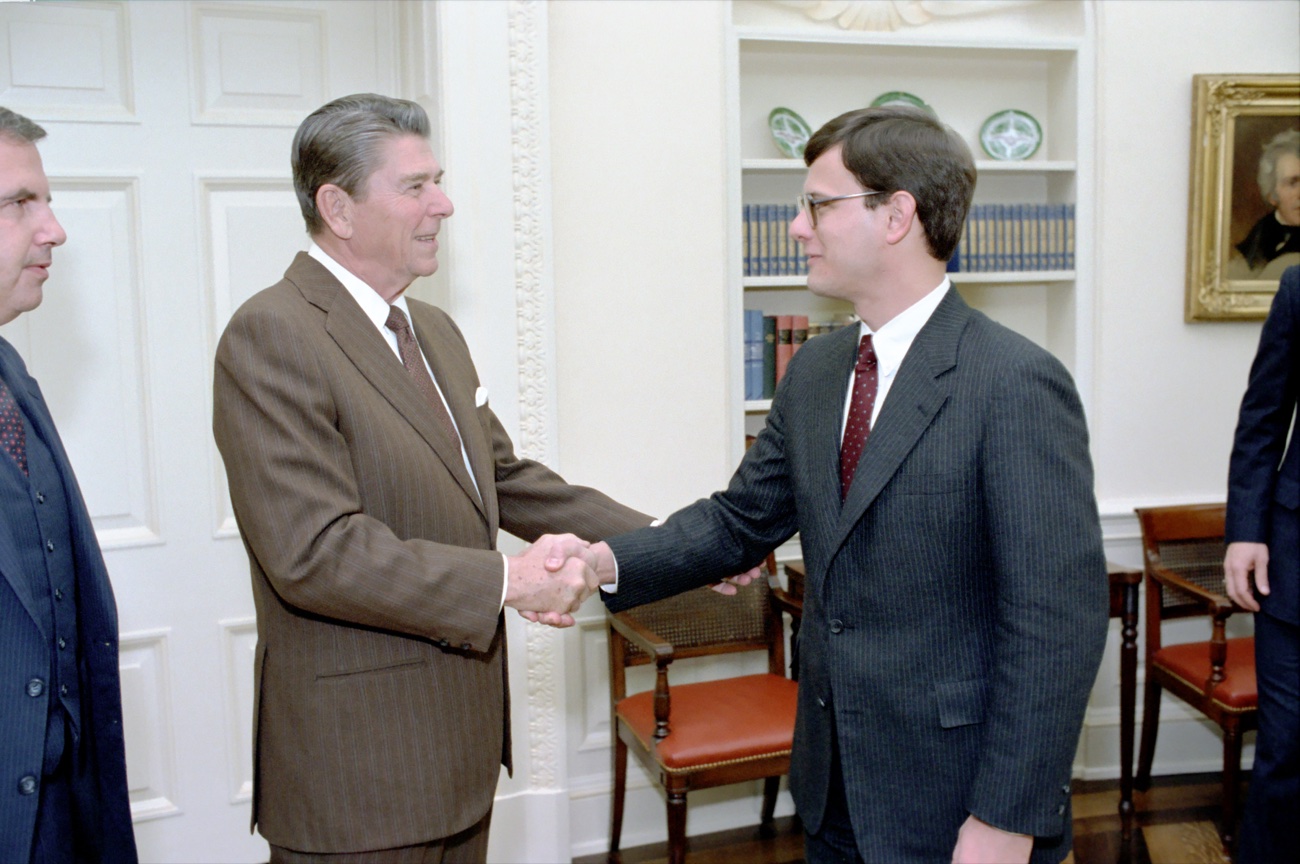
Already in the Oval Office — Reagan's White House Counsel's Office, before he was 30.
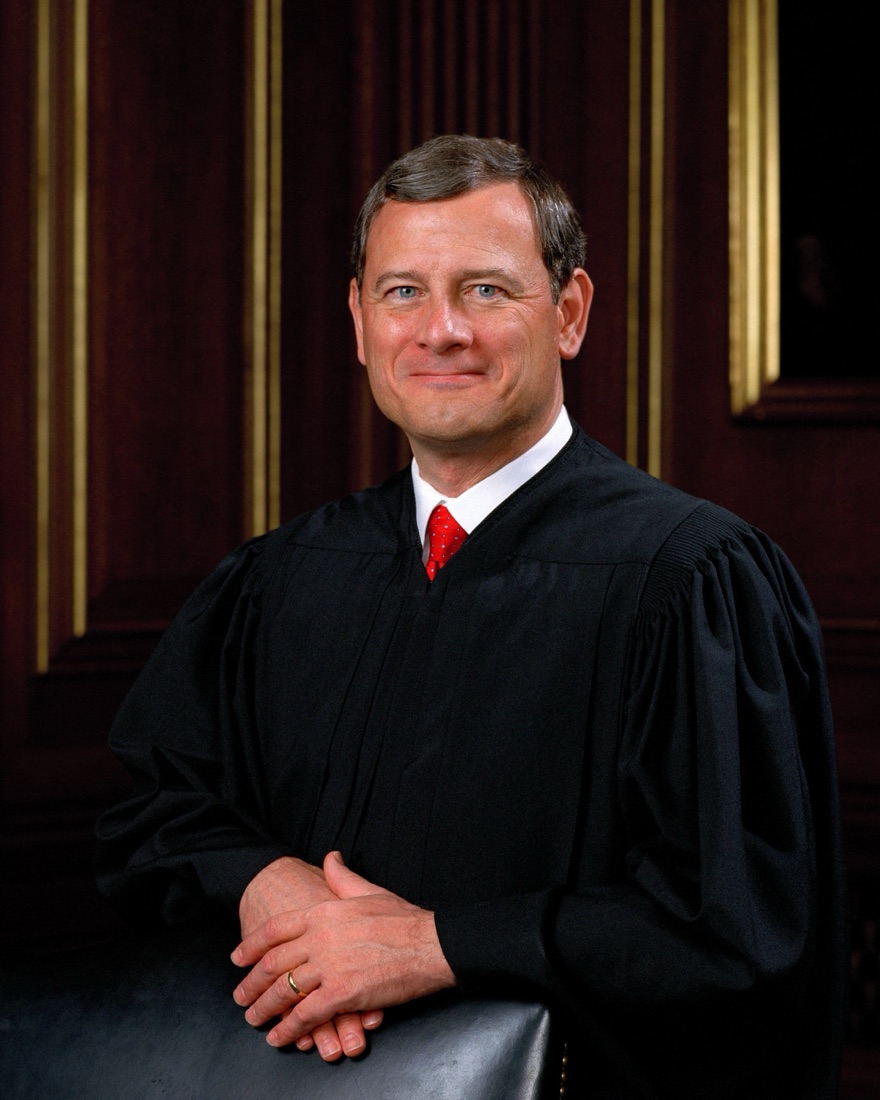
The courts' fiercest defender and chief administrator.
That is a decades-long escalator ride straight up the inside of the institution, and the man never once stepped off it. Clerk, Justice Department, White House, Solicitor General's office, the elite Washington bar, the D.C. Circuit, the Court itself. There is hardly a single chamber of the federal legal power structure that John Roberts has not lived inside of. And here's what I learned in a lifetime studying how people rise inside closed institutions: you do not climb like that by challenging the institution. Nobody hands you that ladder for making trouble. You climb like that by embodying it.
And now he doesn't just sit on the Court — he runs the administrative machinery too.
This is the piece almost nobody outside the legal world understands, and it is the crux of the whole thing. By statute — 28 U.S.C. § 331 — the Chief Justice chairs the Judicial Conference of the United States. The Judicial Conference is the policy-making body for the entire federal court system. It oversees the administration of the federal courts. And it sits atop the very self-discipline apparatus we were just talking about — the whole machinery by which judges judge judges.
So follow the logic. John Roberts presides over the Supreme Court, the final, unappealable word on what the Constitution means. And John Roberts also chairs the body that makes policy for, and helps administer, the self-governing machinery of the entire federal judiciary. The man at the apex of judicial power is the same man at the apex of judicial self-governance. That is the single most concentrated, least-accountable seat in the entire American government — and almost no voter in this country could even tell you the name of the man who sits in it.
And I want to be careful here, and fair, because the documented facts are striking enough that I don't need to exaggerate one of them. I am not accusing John Roberts of a crime. I'm not saying he broke a law. I'm not calling him a criminal — that's not my claim and I won't let anyone put it in my mouth. What I'm saying — as the conclusion I draw from a lifetime of studying closed systems — is that to me he embodies and presides over an unaccountability problem. He is the human face of a branch that has placed itself beyond the ordinary reach of the people. And whether he sought that seat or merely inherited it, that's where he sits.
There's a contradiction in his record you keep coming back to — and you say it's the key to the whole man.
It's the through-line of John Roberts, and once you see it you can't unsee it. People want to sell you a redemption story in reverse — that there was a principled young reformer who got slowly corrupted by the institution. I don't buy it, and I never did. As I read this man, there was never a principle there to corrupt. There was only the climb.
Look at the record, because it's documented — it's sitting in the National Archives. Before he was even thirty, John Roberts was already on the inside: clerking inside the Supreme Court, then advising inside the Reagan White House. And in those years he built his early reputation arguing that the courts had too much power. He wrote memo after memo against the federal courts reaching too far, and he lined up behind what they called court-stripping — using Congress to yank whole subjects away from the federal judiciary. The young John Roberts talked like a man who wanted to cut the courts down to size.
The moment the courts became his power — the moment he was the one in the robe at the top of them — every word of it evaporated. He spent the next forty years becoming the single greatest defender and administrator of judicial power this country has ever produced. Not a check on it. The engine of it. Same man. Exact opposite position. And the only thing that changed in between was whose hand was on the lever.
Here's how I read it. The early talk was never conviction — it was whatever the climb needed that year. He was against the power of the courts when he was clawing his way in from the outside, and he's defended it every single day since he got inside. The man doesn't have a fixed principle. He has ambition, and ambition always points him back toward more power for John Roberts. That's why nobody on the inside is ever going to fix this. They all got there the same way he did.
So I'm going to Congress to do the one thing this man spent an entire career only pretending to care about: put a real, hard check on the power of the courts. The difference between him and me is simple. He said it to get in. I mean it.
The young John Roberts talked like he wanted to cut the courts down to size. The day the courts became his power, every word of it evaporated. He never believed a syllable of it — he believed in the climb.
Let's talk about a case you say is misunderstood — Dobbs. You don't come at it the way most conservatives do.
No, I don't. I bring up Dobbs not to relitigate abortion — I bring it up because it tells you exactly who John Roberts is as an institutional actor. It X-rays the man. In the 2022 Dobbs decision, the one that overturned Roe v. Wade, Roberts did not join the majority's full reasoning. He concurred in the judgment only. He wanted something narrower — to uphold the Mississippi fifteen-week ban that was actually in front of the Court without fully overturning Roe. And he warned, in his own words, that going all the way was "a serious jolt to the legal system."
Read that the way I read it. That's not the voice of a man asking first, "What does the Constitution require?" That's the voice of an institutionalist asking, "How do I protect the Court? How do I draw the least fire, preserve its standing, avoid the jolt?" His instinct, again and again, is to manage the institution's exposure. To shield the brand. The priority isn't the Constitution — it's the preservation and prestige of the Court itself. And notice: this is me attacking him from the right, not the left. Even when the right answer was in front of him, his first reflex was to protect the building rather than follow the principle.
And then there's a lawsuit. People hear "someone sued the Chief Justice" and assume something you don't mean. Be precise.
I'll be exactly precise, because precision is the entire point, and I won't have anyone putting false words in my mouth. In 2025, the America First Legal Foundation — a group founded by Stephen Miller, who is right now one of the most powerful officials in the Trump White House — filed suit against Chief Justice John Roberts, along with the head of the Administrative Office of the U.S. Courts. Their argument was striking: that the Judicial Conference and the Administrative Office — the very bodies the Chief Justice chairs and oversees — should be subject to the Freedom of Information Act, the way an executive agency is. In plain English: they went to court to pry the courts' own internal machinery open to the public.
And the case was dismissed — by a Trump-appointed federal judge, Trevor McFadden, who rejected the theory. Think about what that tells you. A prominent legal group, founded by one of the most powerful people in this very White House, took the Chief Justice of the United States into federal court over whether his own administrative apparatus should be open to the public — and a Trump-appointed judge threw it out. This is no fringe crusade. The pressure to pry the judiciary open came from people with real power, close to the very top — and the system still closed back up over it. The door got knocked on, hard, and it didn't open. That's the whole tell.
You keep saying Roberts has never been more exposed. Why now?
Because the ground is finally moving under him, and he knows it. Look at where he sits. Public trust in his Court is at the lowest point ever measured. The ethics around it got so bad that in 2023 the Justices were finally pressured into writing their first-ever code of conduct — and they wrote it themselves, with no one to enforce it, because that's the only kind they'll accept. When the Senate asked the Chief Justice to come testify about that mess, he said no. Flat no. He's being sued, like we just discussed, and he's taking fire from every direction.
For the first time in his career, the man who built his whole life around managing the Court's image is watching that image get away from him. He's in trouble — not the kind that makes tomorrow's headline, the kind I've watched bring down institutions a lot bigger than any one man. The cracks are showing. I intend to be standing there when the wall finally goes.
In 2024, the courts tried to keep Donald Trump off the ballot — and your critics say that blows a hole in your whole argument about court power.
It does the opposite. That episode is the cleanest illustration I have of the whole argument. In 2023 and 2024, courts and state officials in several states — Colorado, Maine, Illinois — tried to strike Donald Trump from the ballot entirely. They reached for a clause of the Fourteenth Amendment to take the leading candidate for President off the ballot, to remove that choice from the voters before a single vote was cast. Unelected officials, in robes and in offices, trying to decide for the American people who they were allowed to vote for.
And what happened? It didn't hold. The effort collapsed. And the people elected Donald Trump anyway. The voters had the last word, the way they're supposed to.
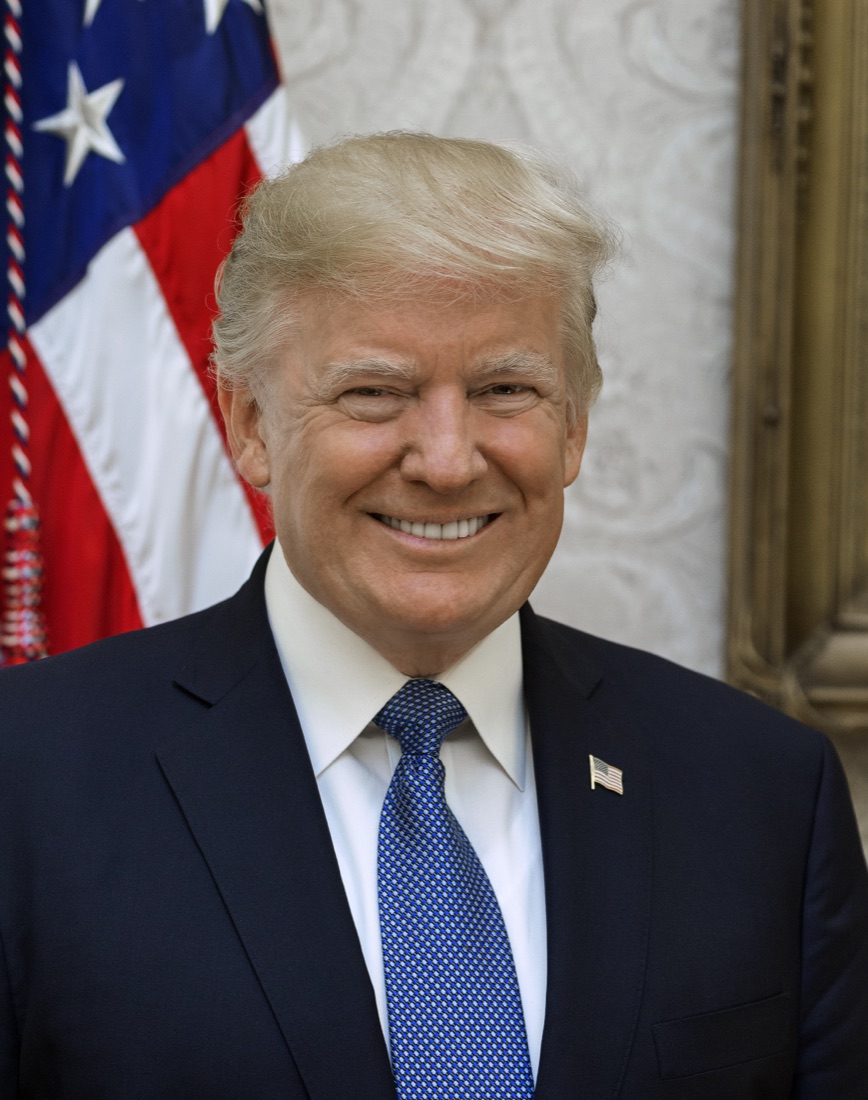
Here's the lesson, and it's the core of everything I believe. The judges and the officials reached too far into the most sacred decision a free people make — who governs them. And the thing that checked that overreach was not another court. It wasn't a cleverer judge. It was the people. The voters were the check. The ballot box was the check. The real, ultimate guardrail against an overreaching judiciary has never been the judiciary policing itself. It has always been a free people who refuse to surrender their choices to anyone in a robe.
Now the public — the polls.
The public has already reached its verdict. The elites just haven't accepted it yet. Trust and approval of the Supreme Court — measured by Gallup and others, year after year — has fallen to historic lows. Not a dip. Not a bad season. Among the lowest levels ever recorded since these organizations began measuring it at all.
Among the lowest levels ever recorded. The country is trying to tell us something.
And what's the reflex of official Washington when they see that number? To scold the public — to say the people just don't understand the Court, they've been misled, they're letting partisanship cloud their respect for a sacred institution. I reject that completely. The people are seeing clearly, maybe for the first time in a generation. They're looking at a branch that decides the most consequential questions in their lives — one they did not elect, that they cannot remove, that polices itself and exempts its own highest members from even that — and they're concluding that something here is badly wrong. And they're dead right. The people are upset, and they should be. Their anger is earned.
So when trust falls like that, it isn't a public-relations problem you paper over with better speeches and prettier ceremonies. It's the country telling you something is badly wrong — and Washington has its fingers in its ears.
Defenders will say an unaccountable Court is exactly what protects rights from the mob — that its distance from public pressure is the whole point.
And I believe in judicial independence. The establishment loves to pretend that anyone who wants accountability must be against independence. That's a trick. Independence means a judge can rule without fear of being fired for an unpopular decision. I want that. Accountability means that when a judge engages in actual misconduct, or the institution drifts outside its constitutional banks, there's a real mechanism to answer for it — not a theoretical one, not a self-administered one inside the same club. You can have both. We used to understand you must have both. What we've built instead is independence without accountability. And independence without accountability is exactly what's rotting the institution from the inside.
This is where you reach back into history — to "judicial supremacy," and a case every high school student learns: Marbury v. Madison.
Because the assumption underneath everything — that the Supreme Court is the single, final, unquestionable arbiter of what the Constitution means, full stop — is itself a contested idea. It is not settled. It was never settled. This is my reading of the history, my interpretation, not holy writ. But the interpretation is sound, and Americans have been taught a flattened, sanded-down version of their own founding. So let's go to Marbury. Everybody invokes it. Almost nobody reads it.
Marbury sues Madison because Madison won't deliver his commission. Madison says no. The honest, narrow holding was a single line:
And from that small, almost trivial dispute, Marshall reached for something enormous — the supreme, final power of the Court to declare what the Constitution means and to strike down the acts of the elected branches. Everything beyond that line was a power the case never required.
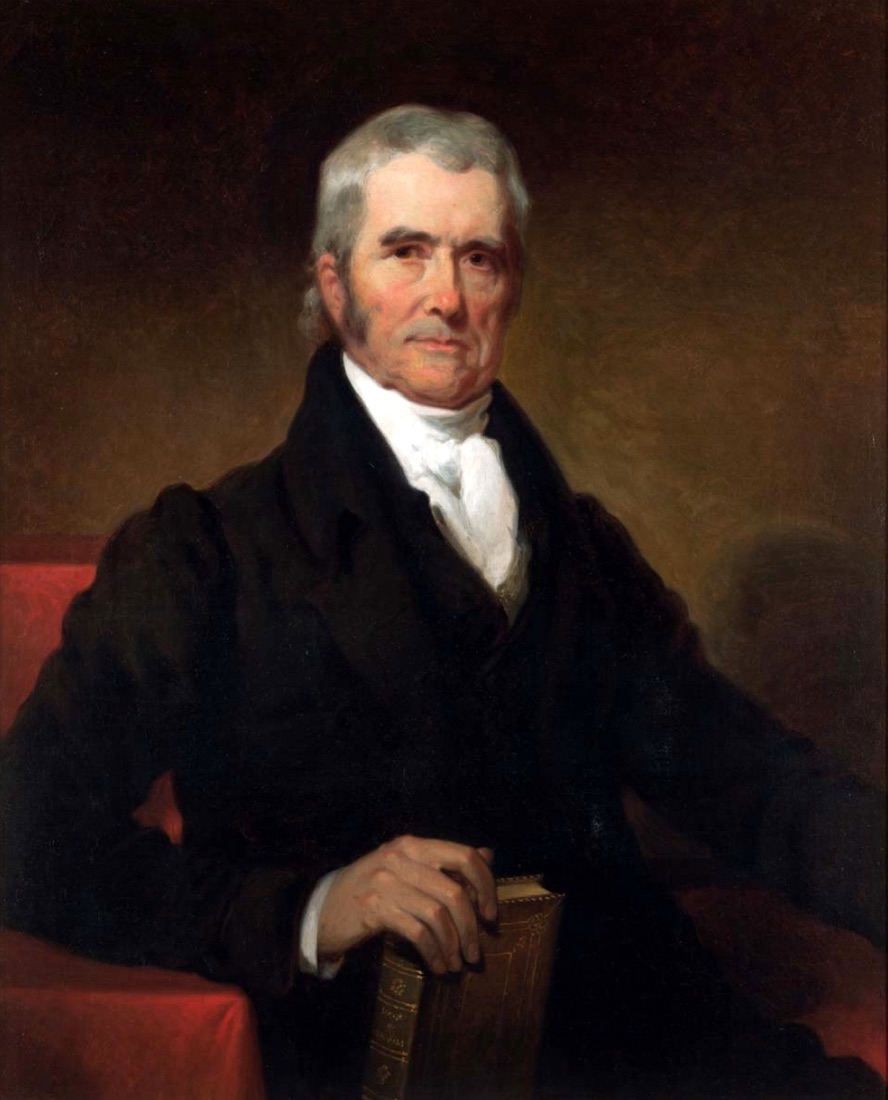
Here's my argument, plainly. Marbury sues Madison because Madison won't deliver his commission to be a judge. And Madison says no. That was all that Marbury v. Madison was about, at its core — a man who wanted a commission, and an official who denied it. Marshall had no business reaching beyond that dispute. The honest holding was narrow and simple: Marbury doesn't get his commission, and Madison may deny it. That should have been the end of it. Marbury loses.
But Marshall didn't stop there. He used that small dispute as a vehicle to smuggle in something enormous — the assertion that the Court itself holds the supreme, final power to declare what the Constitution means and to strike down the acts of the elected branches. Everything outside of "Marbury loses" was Marshall reaching for a power the case did not require and the Constitution did not plainly hand him. That's the original sin. The whole towering edifice of judicial supremacy was built on a single opinion that claimed far more than the dispute ever needed. And I'm not alone in reading it that way — that's the part the establishment doesn't want you to know.
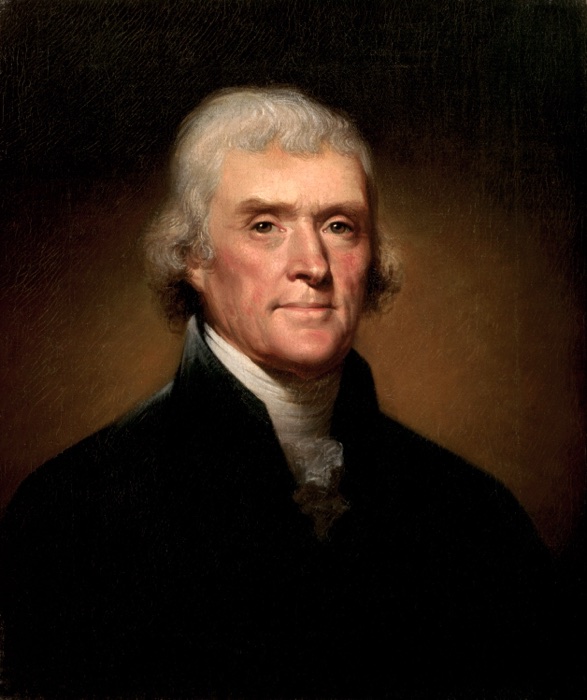
“A mere thing of wax in the hands of the judiciary, which they may twist and shape into any form they please.”
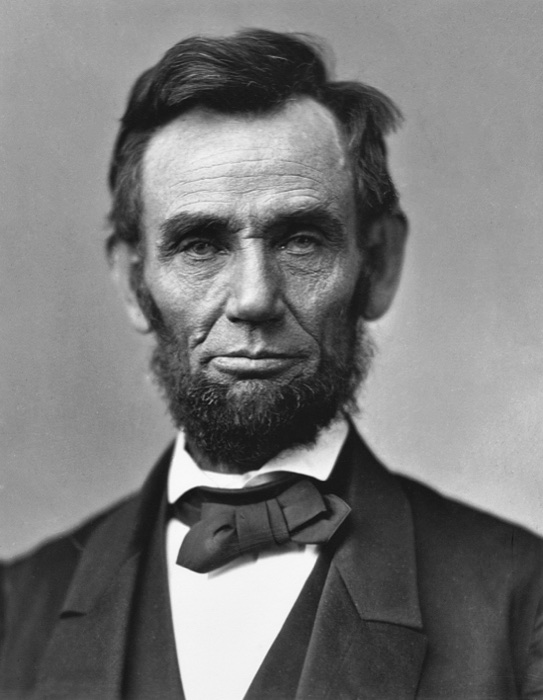
“The people will have ceased to be their own rulers.”
Thomas Jefferson warned against letting the courts make the Constitution "a mere thing of wax in the hands of the judiciary, which they may twist and shape into any form they please." That's a Founder sounding the alarm against the very concentration of power we now live under as if it were the natural order. And Abraham Lincoln, in his First Inaugural, in the gravest hour the Republic ever faced, wrestled openly with the Dred Scott decision — and warned that if the people surrendered every great question to the Court, then "the people will have ceased to be their own rulers." That's not a fringe figure. That's Lincoln. That's Jefferson. Two of the greatest figures this country ever produced, both saying out loud that unquestioned judicial supremacy and genuine self-government are in tension.
Why should conservatives in particular care? Many like the current Court just fine.
Because conservatives, of all people, are supposed to understand the danger of unchecked power. That's the whole inheritance. We don't trust power, because power concentrates and abuses — every time, in every age. So we build structures to limit it, to divide it, to force it to answer. Madison. The separation of powers. Federalism. That's our patrimony. And yet too many conservatives have carved out one exception — the judiciary — because they like the recent results. They like the box scores. And that is a fatal mistake, and I say so as a conservative. Power you celebrate when your team holds it is power your opponents will hold tomorrow. An unaccountable Court that pleases you this decade is an unaccountable Court that will appall you the next — and you'll have spent your credibility defending the unaccountability instead of the principle. A conservative who only wants checks on the power he dislikes is no conservative at all. He's just a partisan admiring a robe he happens to like today.
The Founders gave us this structure. Do you fault them for it?
Here's where I part company with the way it's taught. We talk about the Founders "designing" three branches like it was some careful blueprint, every piece fitted into place. As I read the history, that's not what happened with the courts. The federal judiciary wasn't really designed at all. It got put into the Constitution almost as an afterthought — they put judges in it, and the truth is a lot of those men didn't even want federal judges and had no clear idea what the thing was for. The document itself, at that stage, was a draft. Congress didn't know what to do with it. They sent it out to the states half-formed, and the states pushed back so hard that the pushback is how we got the Bill of Rights in the first place.
So this wasn't handed down off a mountain. It was improvised — stitched together and shoved out the door, a fait accompli nobody fully thought through. And it stayed a confused, half-built thing for a long, long time. The whole arrangement was a mess — and in a lot of ways it's the same mess we're living with today — because the one job they never finished was writing the limits on the courts the way they wrote limits on everybody else.
That's the whole problem in a sentence. They wrote restraints on the president. They wrote restraints on the Congress. The courts they left blank. And of the three, the courts are the one branch that most needed the leash — because the courts are the one branch we can never vote out. A bad president, a bad congressman, we throw out at the ballot box. A federal judge sits for life and answers to no election. So the one power that most needed written limits got the least. I'm not faulting some wise design — there wasn't one. I'm trying to finish a job they never did.
So why you, and why now?
Because nobody inside the system is ever going to fix the system. That's the lesson of decades fighting fraud. The call never comes from inside the house. The people who benefit from a closed, unaccountable arrangement do not reform it. They manage the criticism, they wait it out, they co-opt the critics — the young court-skeptic who climbed all the way up to run the very thing he once postured against. I watched it happen my whole career on Wall Street: the inside doesn't get reformed, the inside digests whoever walks in talking about reform.
I'm 72 years old. I came to this country as a Cuban refugee with nothing in my pockets. I know — not from a book, from my own family's flight — exactly what it means when a government curdles into a closed circle that answers only to itself. We fled one of those. I went to Wharton, I earned my MBA at Harvard, and then I spent my entire career doing the one thing the powerful cannot abide: publishing the truth about them under my own name and refusing to be intimidated. I took down dozens of frauds in a row with a pad, a pen, a phone, no friends, and no capital. I was never bought, for a simple reason — I had no master to buy me. I funded my own work. And I will fund my own campaign. That's the whole point of an outsider: you can only truly check a closed system if you owe that system absolutely nothing.
You're challenging the incumbent, Randy Fine, who carries President Trump's endorsement. Talk to me about this primary.
I have deep respect for President Trump — deep loyalty. He has done more to break open the closed circles of Washington than anyone of my lifetime, and on the courts, on the question of who really governs, the people or the unelected, he and I want exactly the same thing.

The endorsement in this race was a mistake — the kind that gets made fast, on staff recommendations, by people working a hundred contests at once. On this one, they got it wrong. President Trump reads the American people better than anyone in politics, and I have every confidence he'll come to see this race clearly.
And there's a bigger problem than the endorsement, one every Republican in this district needs to see clearly. This seat is winnable — but I don't believe this incumbent can hold it. He's turned himself into a distraction, drawing censure resolutions and public calls to resign over his own social-media posts. A congressman who spends his time generating headlines about himself instead of doing the work is a liability, not an asset — and in a year when we cannot afford to hand away a single winnable seat, that is exactly how a party loses one. This district deserves a representative who shows up, does the work, and can actually hold this seat. I intend to be that representative.
Concretely — what would you actually do?
Congress is not powerless over the courts. It has simply chosen not to act. Article III itself hands Congress real authority over the structure, the jurisdiction, and the administration of the federal courts — and I would use every bit of it. This is where I do the thing John Roberts only ever pretended to want.
Accountability legislation with teeth.
Real, independent oversight from outside the judiciary's own club. Not judges grading judges — a mechanism that doesn't draw its members from the fraternity it reviews, with genuine investigative power. Daylight, with subpoenas behind it.
End the Supreme Court's exemption.
The nine most powerful jurists in America are the least subject to any formal accountability. That's upside down. A binding, enforceable conduct and disclosure regime for the Justices — enforceable by something other than their own honor. That's the floor.
Open the administrative machinery.
Stephen Miller's legal group went to court to open the Judicial Conference and the Administrative Office, and a court shut it down. Congress doesn't need to win that lawsuit. Congress can simply legislate the transparency the courts refused to provide.
Reopen the question of judicial supremacy.
The bare assumption that the Court's word ends every constitutional argument before it begins. Jefferson was willing to have that conversation. Lincoln was willing to have it. We've been told we're not allowed. I think we're long overdue — and that's the conversation that scares them the most.
A closing word.
I spent my whole life arguing that institutions everyone insisted were sound were rotten — and then standing behind the proof under my own name when it cost me dearly. That's my résumé. That's the only credential I'm running on. And I'm telling you now, after weighing it the way I weighed every fraud I ever exposed: to me the federal judiciary has become the least accountable institution in the whole of American government — and the man who sits at the very top of it embodies and presides over that condition. The people already sense it. Their collapsing trust is recognition. The people are upset, and they are right to be.
I am not asking anyone to hate a judge. This isn't about a man, it's about a principle, and the principle is older than any of us. In a free country, no one answers to no one. Not the president. Not the Congress. And not the Court. I've spent decades living that principle against people who held far more power than I ever did, and I never blinked. I'd be honored to spend the next chapter of my life living it inside the Congress of the United States — and finally building the check on the courts that John Roberts spent his whole career making sure no one ever would.